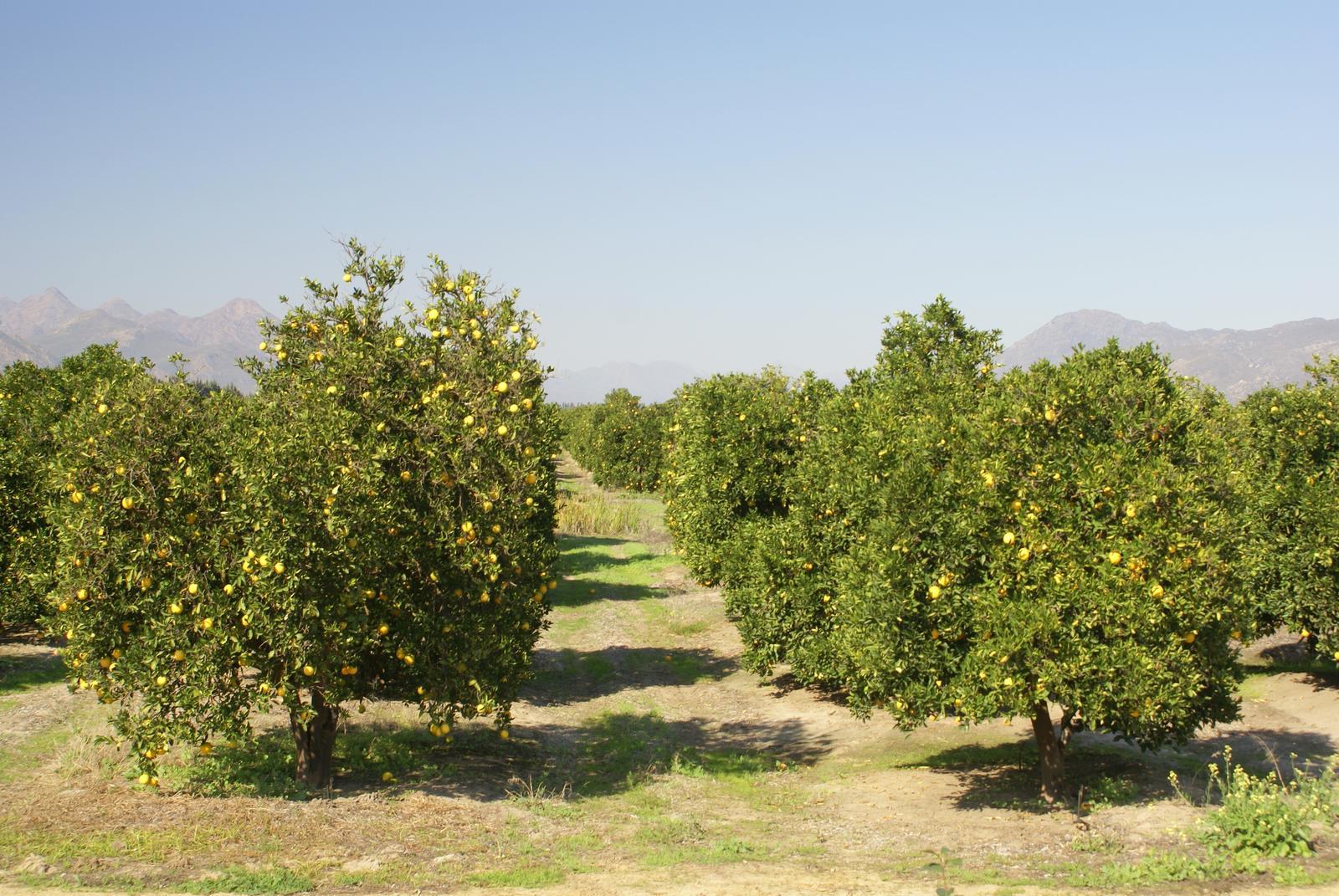
Citrusdal is the centre of South Africa's third-largest citrus-producing area, growing roughly 14% of the national crop across about 200 farms. The same mountains produce more than 90% of South Africa's rooibos. This page is for buyers, importers and retailers: who grows here, when it ships, and what the certifications mean.
The valley in numbers
Sources: Farming in Citrusdal, Farmer's Weekly, and rooibos industry sources — see our history page.
Why fruit grows well here
The valley sits on the upper reaches of the Olifants River, bounded by the Olifants River mountains to the west and the Cederberg to the east. That geography gives it a Mediterranean climate — cool winters and dry summers — which suits varieties that need a spell of cool temperatures to develop colour properly. It is the traditional home of South Africa's soft citrus and grapefruit industry, and is especially known for navel and Valencia oranges.
Rooibos is the other half of the story. Aspalathus linearis grows commercially nowhere else on earth, and the Cederberg around Citrusdal is its heartland — which is why several producers here handle citrus and rooibos side by side.
When does Citrusdal fruit ship?
The harvest and packing season runs from roughly March through September, when about 6 000 workers are at work in the orchards and packhouses. Because the seasons are inverted, South African fruit lands in the northern hemisphere during its summer — filling a counter-seasonal gap when local northern supply is out of season.
| Harvest and packing window | About March to September, varying by cultivar and season |
|---|---|
| Signature citrus | Navel and Valencia oranges; the wider valley is the traditional home of soft citrus and grapefruit |
| Northern-hemisphere arrival | Counter-seasonal — the South African winter harvest reaches the north in summer |
| Rooibos | Harvested in summer; the Cederberg is the only commercial growing region in the world |
Exact windows move year to year. Confirm current availability directly with the producer.
What is Summer Citrus from South Africa?
It is an export programme aimed at the United States, started in 1999 by the Western Cape Citrus Producers' Forum — originally by growers clubbing together to charter refrigerated vessels. It now represents roughly 300 South African growing operations and has grown from 50 tons in its first year to about 60 000 tons.
Summer Citrus is a Western Cape-wide programme, not a Citrusdal-only alliance. Citrusdal growers are a significant part of it, but the membership spans the province. If you are sourcing specifically from this valley, approach the producers directly.
| Founded | 1999, by the Western Cape Citrus Producers' Forum |
|---|---|
| Scale | Roughly 300 South African growing operations |
| Growth | From 50 tons (1999) to about 60 000 tons |
| Varieties | Navels, Midknights, Easy Peelers, Star Ruby grapefruit, Cara-Cara |
| US duty | Duty-free access under AGOA — verify current terms before contracting |
| Main US port of entry | Philadelphia |
Source: Summer Citrus from South Africa and a 25-year retrospective.
Who grows and packs here
A selection of the valley's larger citrus and rooibos operations. Each profile carries only facts the company or the trade press has published, with sources — no prices, availability or quality claims.
Goede Hoop Citrus
The largest single citrus packing operation in South Africa on one premises — around 100 000 tonnes a year, about 6% of the national crop.
Read the profile → Citrus · since 1974ALG Estates
Eight generations in the valley. 25 commercial varieties across 600 hectares, and the only enterprise able to supply citrus ten months of the year.
Read the profile → Citrus & rooibosMouton Citrus
Citrus and rooibos from Brakfontein Landgoed, shipping to the Americas, Europe and Asia. Fairtrade accredited, with Ecocert organic rooibos.
Read the profile → Rooibos · since 1998Carmién Tea
Bulk rooibos exporter and private-label packer. Fairtrade, Rainforest Alliance, organic to USDA, JAS and EcoCert, plus BRCGS.
Read the profile →This is not a complete list of producers in the valley. If your company should be here, email hello@visitcitrusdal.com.
What the certifications mean
Producers here publish a familiar set of accreditations. What each one actually covers:
Certifications lapse, change scope and get added. Treat any accreditation named on this site as a starting point and verify the current certificate directly with the producer before contracting.
Making contact
Visit Citrusdal is an independent guide. We are not an agent, broker or representative for any producer, we take no commission, and we hold no stock. Each profile links to the company's own website — approach them directly.
If you represent a Citrusdal producer and want a profile added, corrected or removed, email hello@visitcitrusdal.com.
Questions buyers ask
What does Citrusdal produce?
Citrus — especially navel and Valencia oranges, with the wider Olifants River valley the traditional home of soft citrus and grapefruit — plus rooibos from the surrounding Cederberg.
Why does South African citrus arrive in the northern summer?
The seasons are inverted. South Africa harvests through its winter, which is the northern summer, so the fruit fills a counter-seasonal gap.
Is there duty on South African citrus into the US?
Under AGOA, South African citrus has enjoyed duty-free access to the United States, with Philadelphia the Summer Citrus programme's main port of entry. Trade terms change — verify current duty status before contracting.
Can I visit the farms?
Some run visitor experiences — see things to do for farm tours and tastings, and where to stay if you are coming to the valley.
Last updated August 2026 · every figure on this page is sourced · nothing about price or availability is stated.