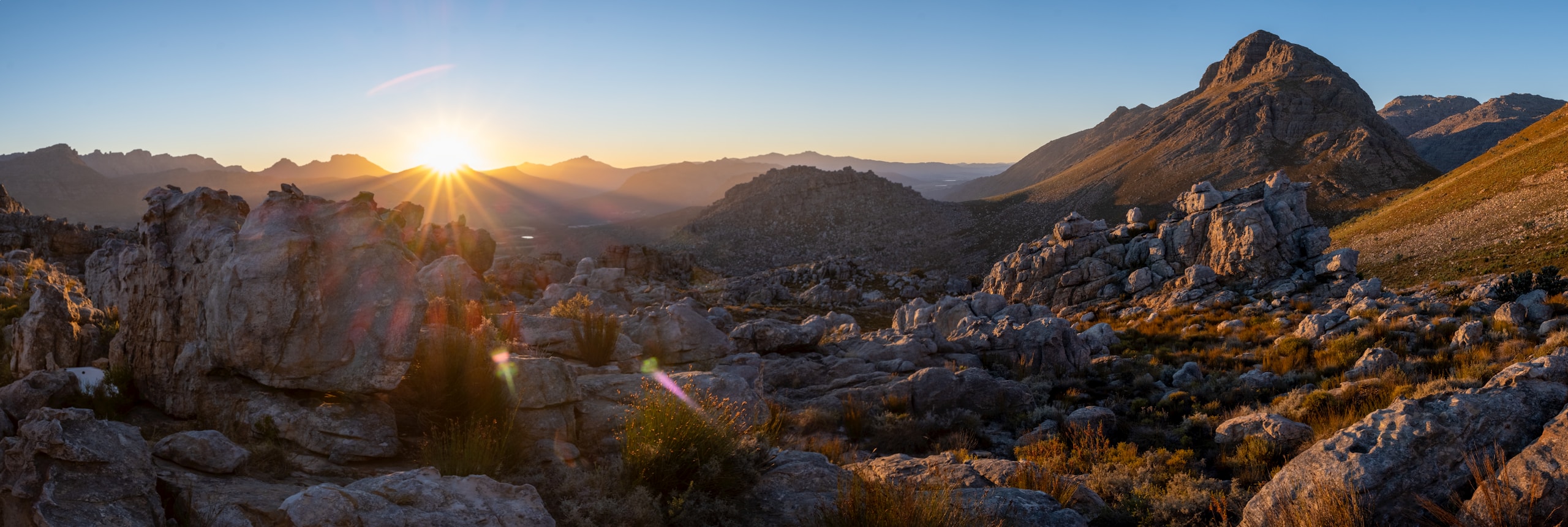
Citrusdal was founded in 1916, but people have been coming to this valley for its warm water since long before that. The San used the hot spring first; the Dutch East India Company wrote it down in 1739. Between the Olifants River and the Cederberg mountains, this is one of the oldest continuously visited places in the Western Cape.
| Town founded | 1916, by the Dutch Reformed Church |
|---|---|
| Hot springs first recorded | 1739, in VOC documents |
| Spring water temperature | 43 °C (109 °F) |
| Spring flow rate | ~105 000 litres per hour |
| Distance from Cape Town | ~160 km (100 miles), about 2 hours up the N7 |
| Setting | Olifants River valley, at the foot of the Cederberg |
| Population | ~7,200 (2011 census) |
| Share of SA citrus crop | ~14% of the national total |
| Cederberg rooibos | 90%+ of the world's supply; grows nowhere else |
| Oldest orange tree in South Africa | On Hexrivier farm nearby — a national monument, over 160 years old |
| Municipality | Cederberg Local Municipality, West Coast District |
Who lived here first?
The San people were the valley's first inhabitants, and the hot spring was central to their life here for thousands of years. Their rock art still survives across the Cederberg — more than 2,500 recorded sites, some of them thousands of years old — making it one of the richest concentrations of rock art on the continent. When Dutch expeditions arrived in the seventeenth century, the valley was already long inhabited.
In 1660 the explorer Jan Danckaert reached the river he named the Olifants, after the great herds of elephant along its banks. In 1725 the VOC established Modderfontein, the first colonial farm in the valley — it still stands today as an old village and gallery.
How old are The Baths hot springs?
The Baths were first mentioned in Dutch East India Company records in 1739, in a report to the Council of Policy that referred to "the farm with the warm baths". Local legend tells it differently: that a herdsman's ox named Kolberg kicked the spring open with its hoof.
The water emerges from the mountain at 43 °C and flows at roughly 105 000 litres every hour — the same today as three centuries ago. That constancy is why the spring has never stopped drawing people.
Governor Rijk Tulbagh had the bathhouses renovated in 1763 for his own use and that of privileged burghers. Among the early visitors were the botanists Carl Thunberg and Francis Masson, who came to study the extraordinary fynbos of the surrounding mountains.
A timeline of the Citrusdal valley
Jan Danckaert names the Olifants River.
Modderfontein established — the first VOC farm in the valley.
The hot springs first recorded in Dutch East India Company documents.
Governor Tulbagh renovates the bathhouses; botanists Thunberg and Masson visit.
The Baths sold into private ownership for £300 and eighty morgen of ground.
Thomas Bain builds the first mountain pass through the neck — Grey's Pass — using convict labour.
Scottish entrepreneur James McGregor buys The Baths and develops the resort.
The town of Citrusdal is founded by the Dutch Reformed Church.
Citrusdal becomes a municipality (1 March 1957).
The pass is rebuilt to an easier gradient and renamed Piekenierskloof.
The Baths passes out of McGregor family hands after 112 years.
Historical dates from The Baths, Wikipedia, Mountain Passes South Africa and VOC records.
Why is it called Citrusdal?
"Citrusdal" means citrus valley in Afrikaans. Citrus has defined the Olifants River valley for well over a century — the deep, well-drained soils and hot, dry summers produce oranges, lemons and soft citrus that ship around the world. Today the valley grows roughly 14% of South Africa's entire citrus crop. South Africa's oldest orange tree, more than 160 years old and declared a national monument, still bears fruit on the Hexrivier farm just outside town.
The same mountains give the valley its other famous crop: rooibos, the caffeine-free red tea that grows nowhere else on earth. The Cederberg produces more than 90% of the world's rooibos — so a cup of it is, almost by definition, a cup of this place.
Who built the Piekenierskloof Pass?
The road you take into Citrusdal is history in itself. In 1857 the engineer Thomas Bain — builder of many of the Cape's great mountain passes — cut the first road through the neck above the town, using between 100 and 220 convict labourers. He named it Grey's Pass after the Cape governor Sir George Grey.
The route's older name was Piquenierskloof, after the Piekeniers — the pikemen once posted to guard the mountain gateway. When the pass was rebuilt to an easier gradient in 1958 for the modern N7, it took that original name back: Piekenierskloof. The climb still delivers one of the finest first views of any town in the Western Cape.
Pass history from Mountain Passes South Africa.
How far is Citrusdal from Cape Town?
Citrusdal is about 160 km (100 miles) north of Cape Town — roughly a two-hour drive up the N7, over the Piekenierskloof Pass and down into the valley. It sits in the Cederberg Local Municipality of the West Coast District, with a population of about 7,200 (2011 census).
Citrusdal history — quick questions
Where is Citrusdal?
Citrusdal is in the Olifants River valley of the Western Cape, at the foot of the Cederberg mountains, about 160 km north of Cape Town on the N7.
What is Citrusdal known for?
Its natural hot springs (The Baths), citrus farming — the valley grows about 14% of South Africa's citrus crop — and rooibos tea, plus the Cederberg's hiking, bouldering and San rock art.
Is Citrusdal worth visiting?
Yes — it pairs a 43 °C natural hot spring recorded since 1739 with citrus and rooibos farms, mountain adventure and dark night skies, all two hours from Cape Town. It suits a slow weekend or an active one.
Last updated July 2026 · sources cited throughout · see also our visitor guide.